

25-30%
Reduced concrete volume
Lower concrete volume and reduced slab thickness, for lighter yet stronger structures.

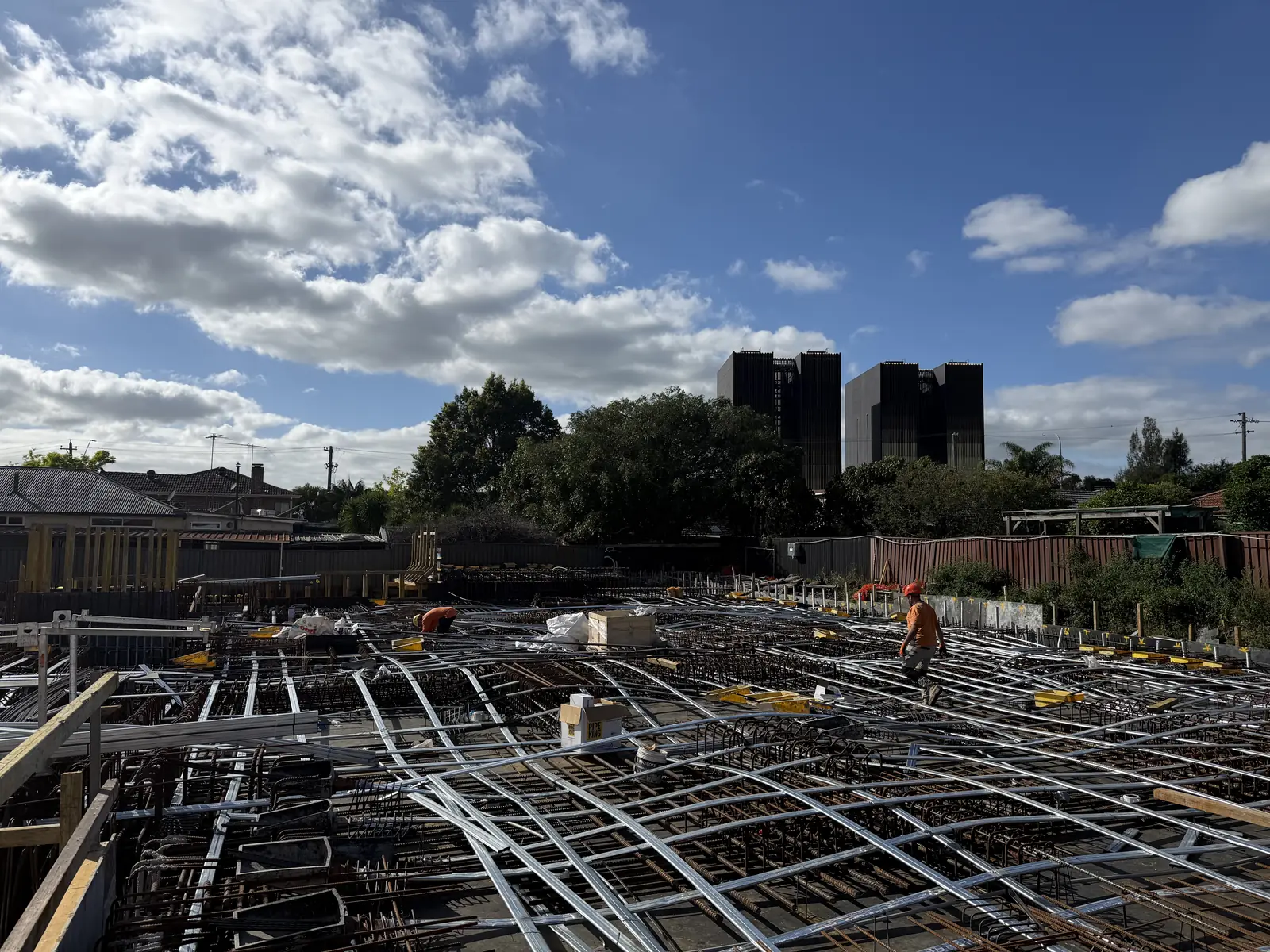
A post-tensioned slab has high-strength steel tendons draped through it: low in the middle of each span and high over the supports.
When the tendons are stressed, they push up where the slab wants to sag. That balances much of the load, so the slab can be thinner and span further.
Drag the slider to stress the tendons.
Simplified, with deflection exaggerated so it's easy to see.
Why builders, developers and engineers choose post-tensioned slabs.
25-30%
Lower concrete volume and reduced slab thickness, for lighter yet stronger structures.
Tendons do much of the work, reducing conventional reinforcement and the labour to fix it.
Increased column spans give more flexible layouts and more usable living, commercial and work space.
Improved crack and deflection control, for better finishes and a longer service life.
Thinner slabs add clear height between floors, or fit more floors in the same building height.
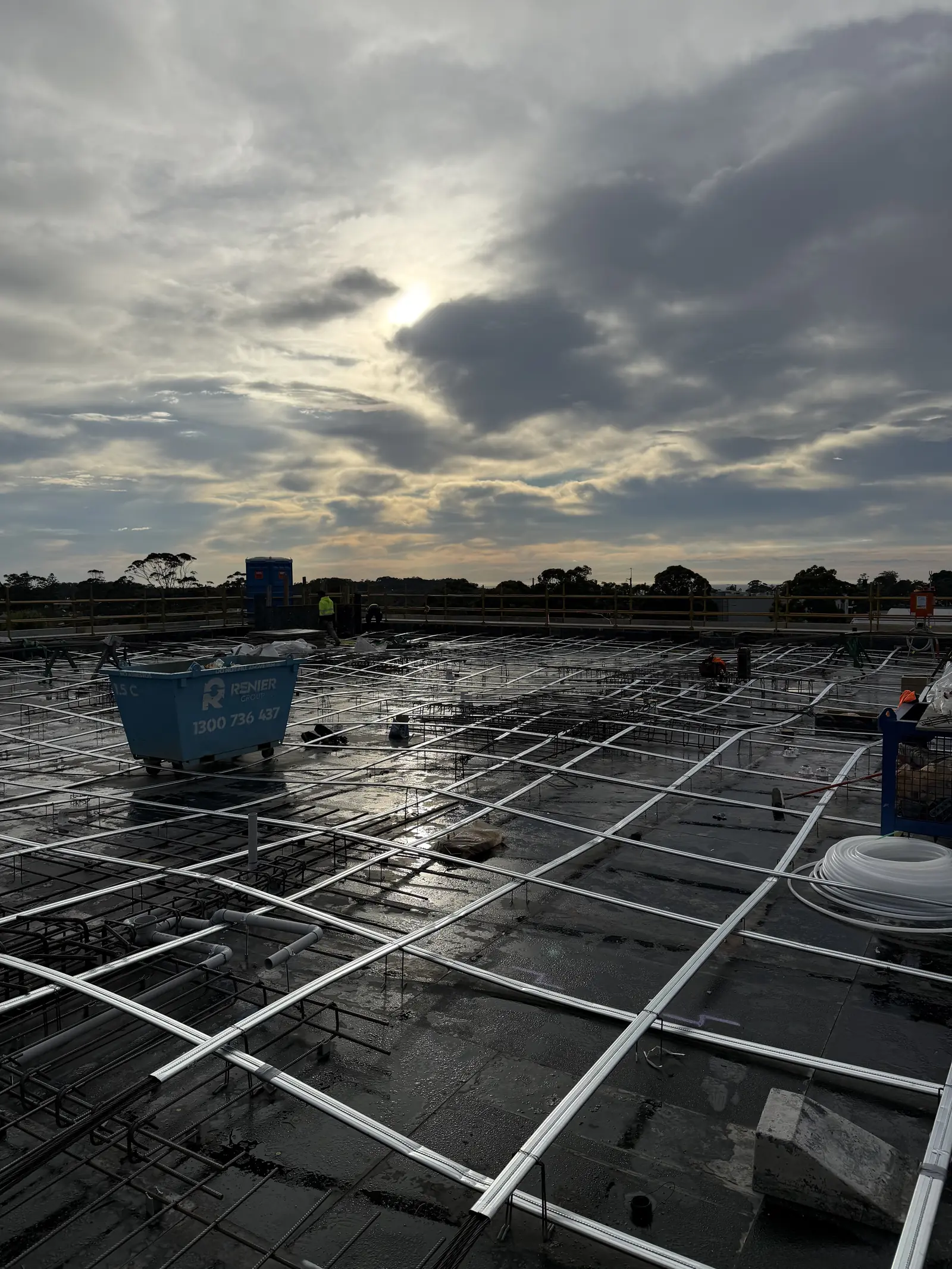
Slabs reach load capacity sooner, supporting faster floor cycles and accelerated construction schedules.
A lighter structure means smaller foundations and less excavation.
Less concrete and steel means lower embodied carbon, supporting sustainability ratings such as LEED.
Switch between a conventionally reinforced frame and a post-tensioned one to see what changes.